Jérôme-Nicolas Séchard
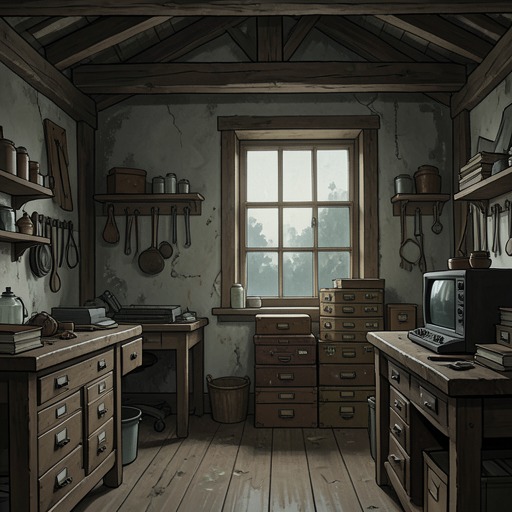
Illusions perduesJérôme-Nicolas Séchard rises from an uneducated pressman to a wealthy provincial printer, but his success sharpens rather than softens his self-interest. The old wooden presses he cherishes are the instruments of his trade and the setting for his defining conflict with David Séchard: when the son returns trained to modernize the business, the father sees an opportunity to sell it to him on harsh terms.
Identity and Early Career
In the provincial printing trade, pressmen were nicknamed Bears, while compositors were called Monkeys: one moved back and forth between ink and press, the other reached repeatedly into the compartments holding the type. Jérôme-Nicolas is an old Bear, a former journeyman who never learned to read or write. Around fifty years old in 1793, he had a wife and so escaped the mass requisition that sent many workers to the armies. When the master printer died, leaving a childless widow, the establishment seemed close to collapse: Jérôme-Nicolas could operate the press but could not take on the compositors’ work.
A representative of the people nevertheless granted him a master printer’s patent and requisitioned the shop to print decrees of the Convention. Jérôme-Nicolas used his wife’s savings to compensate the former master’s widow, buying the equipment for half its value. He survived the demands of the new work by hiring a capable assistant: a nobleman in hiding who composed, read, and corrected the decrees, while Jérôme-Nicolas printed and posted them. Later, an abbé served in a similar role. By 1802, Jérôme-Nicolas still could not read or write, but he had earned enough to pay for a foreman and had become a formidable employer.
Trade, Habits, and Character
His lack of formal knowledge did not prevent him from developing a practical, calculating command of the business. He learned to estimate the price of a page or sheet at a glance according to the type used. He could argue that large letters cost more because they were harder to move, or that small letters cost more because they were harder to handle. Since composition was the part of printing he did not understand, he distrusted it and protected himself with contracts heavily weighted in his favor. When compositors worked by the hour, he watched them constantly; when a paper manufacturer was in financial difficulty, he bought the stock cheaply and stored it. He also acquired the building that had housed the printing shop for generations.
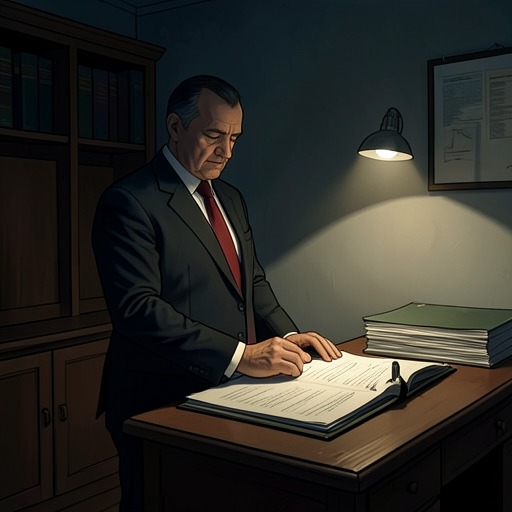
His avarice is bound up with his bodily appetites. As he grew older, he drank more heavily; his swollen, wine-flushed face, large nose, and small, watchful eyes make his appearance an extension of the appetites the narrative attributes to him. For thirty years he wore the same municipal tricorn, with a greenish velvet waistcoat and trousers, an old brown frock coat, mottled cotton stockings, and silver-buckled shoes. The clothes preserve the pressman in the bourgeois, as though the man had been made for that costume. His affection for the old wooden presses is real, but it does not outweigh his concern for money: his attachment to the tools coexists with a readiness to exploit the people who work with them.
The Sale to David
Jérôme-Nicolas had sent David to study higher typography in Paris, but urged him to make money there and warned him not to expect financial help from home. David nevertheless excelled at the Didot Printing House, continued his education, and returned near the end of 1819 without having cost his father a sou. Jérôme-Nicolas greeted him with conspicuous solicitude, arranging a warmed bed, a fire, and supper. The next day, after trying to get his son drunk over a substantial dinner, he pressed to discuss business. The hospitality was part of a long-prepared negotiation: he wanted to sell, and he wanted to sell dear.
He valued the patent, clientele, and newspaper, as well as the old equipment and stock. He insisted that provincial customers preferred familiar, heavily illustrated printing to more refined innovations, invoking wedding notices that local buyers would not consider complete without decorative figures and garlands. David, reserved and tender-hearted, recoiled from bargaining with his father and initially took the old man’s appetite for the tools as a sign of attachment rather than greed. Although Jérôme-Nicolas had acquired the business for ten thousand francs in assignats and thirty thousand francs was an exorbitant price in its current condition, David accepted the valuation and the terms.
The partnership agreement required David to pay twelve hundred francs in annual rent for the house, which his father had bought for six thousand livres. Profits were to be divided equally until David repaid the thirty thousand francs; after that, he would become sole owner of the printing house. Jérôme-Nicolas reserved one of the two attic rooms for himself. When David asked his partner to provide working capital, the father refused: he claimed that transferring the shop was his entire contribution, and argued that David could use the money he had earned in Paris. The new proprietor thus received the business without the funds needed to operate it, while remaining bound by the father’s rent and repayment terms.
Strategy Against the Cointet Brothers
The rivalry with the Cointet brothers exposed both David’s vulnerabilities and Jérôme-Nicolas’s tactical ability. David did not align himself with either political camp, although provincial printers depended on political and religious connections to attract customers. The Cointet brothers cultivated the royalist and ecclesiastical market, secured printing privileges from the Prefecture and bishopric, and attacked David as a liberal and an atheist. Their gains included religious printing, and they established a second advertising paper; the Séchard shop’s advertising revenue fell by half.
When the Cointet brothers proposed buying the Journal de la Charente, Jérôme-Nicolas came quickly from Marsac and ordered David to leave the negotiation to him. He recognized that the accusations against David could also preserve a market: liberal lawyers, notaries, and merchants might continue placing their notices with the Séchard business. He used that argument to resist the sale and initially demanded sixty thousand francs for the printing house. His defense of the family’s position, however, was inseparable from his own interest in the proceeds. He ultimately secured twenty-two thousand francs for the newspaper, while David accepted a clause forbidding him to print any newspaper, on pain of thirty thousand francs in damages. The sale crippled the remaining shop as a commercial rival. Jérôme-Nicolas intended to apply the money toward what David owed him, while the old rent continued; he had surrendered the paper but not his claim on his son’s business.
Fatherhood and Narrative Role
Jérôme-Nicolas’s relation to David is presented as a contest of interests disguised, at moments, as paternal care. He once treated his only son harshly and made him work at the type cases during school holidays, ostensibly to teach him to earn a living. He also paid for David’s education and sent him to Paris, but did so with the expectation that the son would return prepared to take over the establishment. Once David was in a position to buy it, that expected succession became a transaction between opponents: Jérôme-Nicolas wanted the highest price, while David needed the shop at a workable one.
The contrast between them gives the printing house its larger significance. David brings education, scientific curiosity, and a generous temperament; Jérôme-Nicolas brings experience sharpened into suspicion and a keen instinct for extracting value. He can recognize the commercial weakness of a rival and bargain effectively with the Cointet brothers, yet his success leaves his son burdened with debt, rent, and restrictions. Even after selling the Journal de la Charente, he occasionally returns to the shop, drawn by the old presses as well as by the rent he is owed. His attachment is genuine, but the business relationship continues to govern what fatherhood means to him.